Training
Training for hills when home is flat
Preparing for a hilly trail from a flatter part of Belgium means planning for climbs, descents and changing ground. Each asks something different of you.
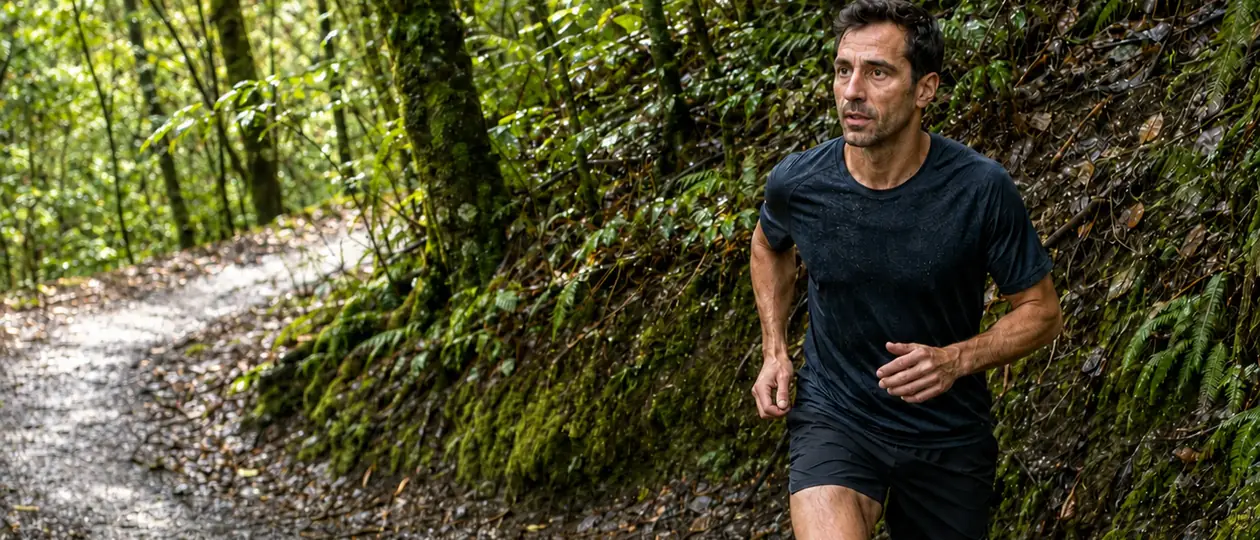
Keep the easy running that already fits your week. Add opportunities to practise climbing, descending and moving over uneven ground within the training you can recover from.
An incline treadmill or a short local hill can help you work uphill. Neither replaces time on the descents and surfaces you will meet on the trail.
Start with the course, not a kilometre conversion
For a trail in the Ardennes or a mountain race abroad, read the organiser’s route profile and terrain description. Note climbing, descending, surface, likely time on feet and any cut-offs.
Two routes with the same distance and elevation gain can feel different when one has long climbs and the other has repeated short rises. Avoid treating a flat-road pace as your target everywhere.
A small treadmill study found that the energy cost of running changes with slope. It does not provide a personal race-time prediction. Minetti and colleagues, 2002.
Use nearby terrain for a specific purpose
A short, accessible slope gives you a place to practise climbing and changing between running and walking. An incline treadmill can give you a longer continuous climb.
Use effort and duration to describe those sessions. Keep the slope and workload appropriate to your experience. A footbridge, staircase or path must be open, permitted and suitable for training.
Keep strength work you already tolerate in the plan. If you want to add unfamiliar exercises or loaded step-downs, ask a qualified coach to help set the starting load.
Give descending its own preparation
Running downhill asks your legs to absorb repeated loading. Start with manageable descents at a controlled pace, with enough recovery to see how you respond.
Do not turn a first visit to steep terrain into a race-effort test. Longer or faster descents add demands that an uphill treadmill session did not rehearse.
In a small study, repeated downhill sessions reduced muscle soreness without reducing every measure of fatigue. Less soreness is not proof of full recovery. Bontemps and colleagues, 2025.
An example week built around a weekend visit
This is an illustration for a runner already comfortable with three runs a week. It is not a beginner plan or a tested formula for a particular race.
Tuesday: keep your familiar easy run on a local flat route.
Thursday: replace part of a usual run with controlled uphill walking or running. Keep the overall session within a workload you already tolerate.
Weekend: use the usual longer outing for a permitted hilly route. Practise pacing, footing and walking when appropriate. Shorten the outing if the unfamiliar terrain makes it more demanding.
Keep recovery days around the new terrain exposure. Review fatigue and any persistent symptoms before the next demanding session. Choose the duration with your existing plan or human coach.
Use Belgian terrain deliberately
If your weekday routes are flat, a planned visit to suitable hills can cover the missing skills. Match the outing to the course you are preparing for.
The Ardennes are one option for hillier terrain. Check the specific route’s access, surface and conditions before travelling. A forest path, a muddy descent and an alpine trail are different preparations.
For route options, use Sport Vlaanderen’s running-route finder and Extratrail’s route pages in eastern Belgium. Check the operator’s current access notices before travelling.
If similar terrain is unavailable, record that limitation in your preparation. More flat kilometres cannot demonstrate that you have practised long descents or technical footing.
Make the next week reflect what happened
Record the route, time on feet, climbing and descending, perceived effort and how you feel afterwards. A device file and a short check-in describe different parts of the outing.
Trailwise can bring supported activity data and your check-ins together for the next training conversation. Its signals do not certify race readiness or that training is safe.
See how your device data reaches Trailwise and how the coach fits your running.
Sources and limits
The two studies above examine controlled exercise, not this example week or Trailwise. The week and local planning suggestions are editorial examples. They have not been validated as a training programme.
Trailwise is not a medical device. Neither is it a replacement for a doctor or a physiotherapist. Trailwise flags what is worth a conversation. It does not diagnose, and it will tell you when it does not know.